
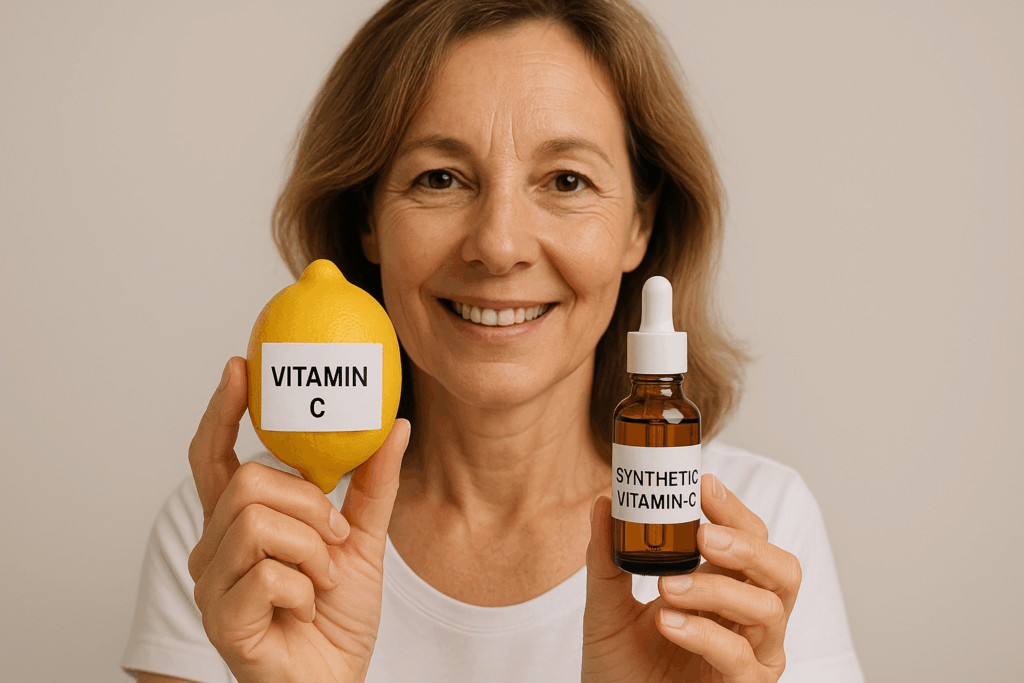
When it comes to anti-ageing skincare, vitamin C is often the first ingredient people look for. It is well known for brightening, reducing the appearance of fine lines, and supporting collagen. But there is another marine-derived ingredient that not only rivals vitamin C in performance, it also outshines it in sustainability: fucoidan from Fucus vesiculosus, a certified organic seaweed extract.
In this article, I will share why I chose fucoidan over vitamin C for my Oceanic Day and Evening Creams, and why this gentle, renewable ingredient may be a better choice for both your skin and the planet.
Vitamin C in skincare is usually in the form of ascorbic acid or a derivative. While the molecule itself is identical to the vitamin C found in fruit, almost all vitamin C used in skincare is synthetically produced.
The process begins with corn glucose, which undergoes multiple fermentation and chemical steps to become ascorbic acid. This manufacturing route ensures purity, but it is energy-intensive and heavily industrial.
Fucoidan is a natural bioactive compound found in brown seaweed such as Fucus vesiculosus. Unlike vitamin C, fucoidan is extracted directly from seaweed using gentle, water-based methods. At Seadragon Organic, the fucoidan in my Oceanic creams comes from certified organic, sustainably harvested seaweed, grown in pristine waters.
This marine ingredient has been clinically shown to:
And it achieves these results without the instability that vitamin C is known for.
The environmental story is where fucoidan truly shines. While vitamin C requires agricultural crops and heavy industrial processing, seaweed gives back more than it takes. It grows abundantly in the ocean, improves biodiversity, and naturally sequesters carbon.
At Seadragon Organic, I use fucoidan that is certified organic and sustainably harvested to ensure ecosystem health. This means every time you apply our Oceanic creams, you are choosing not just an effective skincare ingredient, but one that is kinder to our environment.
Both vitamin C and fucoidan have their place in skincare, but if you are looking for a high-performing, stable, and sustainable ingredient, fucoidan offers a more environmentally friendly alternative.
That is why I chose to include fucoidan in the Oceanic Day Cream and Oceanic Evening Cream. These creams bring together clinical performance with certified organic, marine-sourced sustainability — a combination that aligns with everything Seadragon Organic stands for.
| Aspect | Vitamin C in Skincare | Fucoidan (from Fucus vesiculosus) |
|---|---|---|
| Source | Made in factories from corn sugars through multi-step chemical processing. | Extracted from certified organic seaweed, sustainably harvested in pristine waters. |
| Skin Benefits | Brightens and supports collagen, but can be unstable and break down quickly. | Clinically shown to reduce wrinkles, improve elasticity, hydrate, and help even skin tone. Naturally stable. |
| Sustainability | Relies on crop farming and energy-intensive industrial production. | Seaweed is renewable, absorbs carbon, grows without fertilisers or pesticides, and supports marine ecosystems. |

Five simple truths about what you need and perhaps what you don’t when it comes to skincare for women in mid-life
Finally a sustainable facial system that harmonises certified organic ingredients, clinically proven bio-active marine, and sustainable packaging and ingredients.